
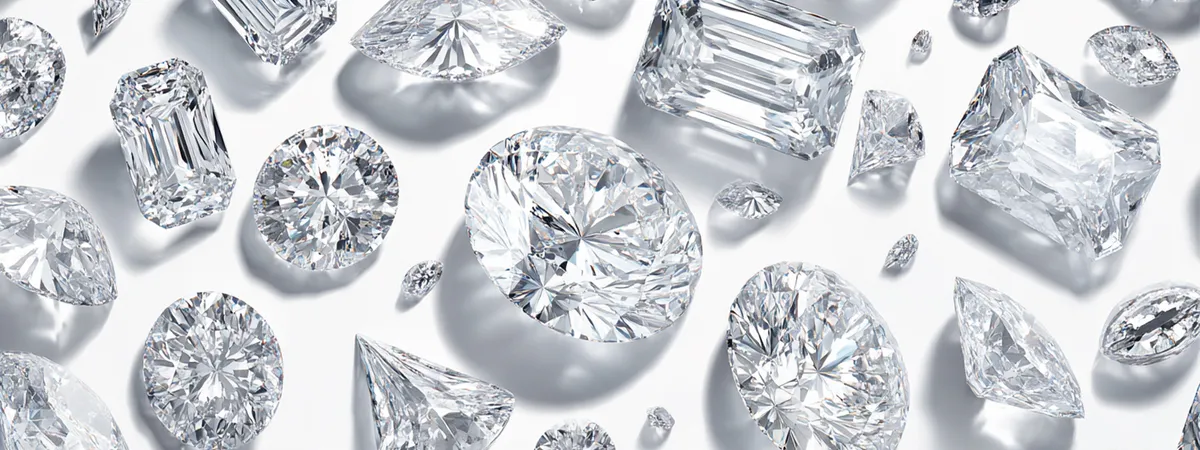
Diamond 4 Cs Explained
When purchasing a diamond, whether for an engagement ring, anniversary gift, or personal collection, understanding the 4 Cs is essential. The 4 Cs are the universal standard used to evaluate diamond quality across the world. They were established to create consistency, transparency, and trust in diamond grading.
The 4 Cs are Cut, Color, Clarity, and Carat Weight. Each one measures a different aspect of a diamond’s structure and appearance, and all four must be considered together.
1. Cut: Light Performance and Brilliance
Cut does not refer to a diamond’s shape. It refers to how well the diamond has been proportioned, faceted, and finished by the cutter.
Cut directly affects:
Cut Grades
Most laboratories grade cut as:
2. Color: Measuring the Absence of Color
Diamond color measures how much body color is present in a diamond. Most diamonds contain traces of yellow or brown, formed naturally during crystal growth.
The grading scale runs alphabetically from D to Z:
3. Clarity: Internal Characteristics and Surface Features
Clarity evaluates the natural internal and external characteristics created during a diamond’s formation. These characteristics are not flaws but rather proof of a diamond’s natural origin.
Common Types of Inclusions
4. Carat Weight: Understanding Size and Proportion
Carat is a unit of weight, not visual size. One carat equals 0.20 grams.
Diamonds of the same carat weight can appear very different in size depending on:
Carat weight also impacts price non linearly. Diamonds increase significantly in cost at popular weight milestones such as 1.00 ct, 1.50 ct, and 2.00 ct.
How the 4 Cs Work Together
No diamond is evaluated by a single factor alone. A balanced combination often delivers the best beauty and value.
Examples:
Diamond Certification and Grading Reports
Reputable diamonds are accompanied by an independent grading report from a recognized laboratory.
This report documents:
Final Educational Takeaway
The 4 Cs provide a scientific and standardized way to evaluate diamonds, but they do not replace seeing the stone in person. Beauty is a combination of physics, craftsmanship, and personal preference.
An educated buyer understands how light, structure, and natural formation come together to create brilliance. When you understand the 4 Cs, you are not just buying a diamond. You are choosing a stone that reflects knowledge, intention, and lasting value.
Shop Engagement Rings: https://www.derricojewelry.com/jewelry/bridal/engagement-ring-settings?showAll=true&sortSpec=featured&showAll=true
Source: https://4cs.gia.edu/en-us/?utm_source=chatgpt.com
When purchasing a diamond, whether for an engagement ring, anniversary gift, or personal collection, understanding the 4 Cs is essential. The 4 Cs are the universal standard used to evaluate diamond quality across the world. They were established to create consistency, transparency, and trust in diamond grading.
The 4 Cs are Cut, Color, Clarity, and Carat Weight. Each one measures a different aspect of a diamond’s structure and appearance, and all four must be considered together.
1. Cut: Light Performance and Brilliance
Cut does not refer to a diamond’s shape. It refers to how well the diamond has been proportioned, faceted, and finished by the cutter.
Cut directly affects:
- Brilliance (white light return)
- Fire (colored light dispersion)
- Scintillation (sparkle when the diamond moves)
Cut Grades
Most laboratories grade cut as:
- Excellent
- Very Good
- Good
- Fair
- Poor
2. Color: Measuring the Absence of Color
Diamond color measures how much body color is present in a diamond. Most diamonds contain traces of yellow or brown, formed naturally during crystal growth.
The grading scale runs alphabetically from D to Z:
- D–F: Colorless. Extremely rare and bright
- G–J: Near colorless. Appears white once set
- K–M: Faint warmth visible to trained eyes
- N–Z: Noticeable yellow or brown tint
3. Clarity: Internal Characteristics and Surface Features
Clarity evaluates the natural internal and external characteristics created during a diamond’s formation. These characteristics are not flaws but rather proof of a diamond’s natural origin.
Common Types of Inclusions
- Crystals or minerals
- Feathers (small internal fractures)
- Clouds (groups of tiny inclusions)
- Pinpoints
- FL / IF: No inclusions visible under 10x magnification
- VVS1–VVS2: Minute inclusions that are extremely difficult to detect
- VS1–VS2: Minor inclusions visible under magnification only
- SI1–SI2: Noticeable inclusions under magnification, often eye clean
- I1–I3: Inclusions visible to the naked eye
4. Carat Weight: Understanding Size and Proportion
Carat is a unit of weight, not visual size. One carat equals 0.20 grams.
Diamonds of the same carat weight can appear very different in size depending on:
- Cut quality
- Shape
- Depth & Table Proportions
Carat weight also impacts price non linearly. Diamonds increase significantly in cost at popular weight milestones such as 1.00 ct, 1.50 ct, and 2.00 ct.
How the 4 Cs Work Together
No diamond is evaluated by a single factor alone. A balanced combination often delivers the best beauty and value.
Examples:
- A slightly lower color paired with an excellent cut can appear brighter than a higher color with poor cut
- A VS clarity diamond can look identical to a flawless diamond once mounted
- A well cut slightly smaller diamond can appear larger than a heavier poorly cut stone
Diamond Certification and Grading Reports
Reputable diamonds are accompanied by an independent grading report from a recognized laboratory.
This report documents:
- The 4 Cs
- Proportions and measurements
- Polish and symmetry
- Fluorescence
- Plot diagrams of inclusions
Final Educational Takeaway
The 4 Cs provide a scientific and standardized way to evaluate diamonds, but they do not replace seeing the stone in person. Beauty is a combination of physics, craftsmanship, and personal preference.
An educated buyer understands how light, structure, and natural formation come together to create brilliance. When you understand the 4 Cs, you are not just buying a diamond. You are choosing a stone that reflects knowledge, intention, and lasting value.
Shop Engagement Rings: https://www.derricojewelry.com/jewelry/bridal/engagement-ring-settings?showAll=true&sortSpec=featured&showAll=true
Source: https://4cs.gia.edu/en-us/?utm_source=chatgpt.com