
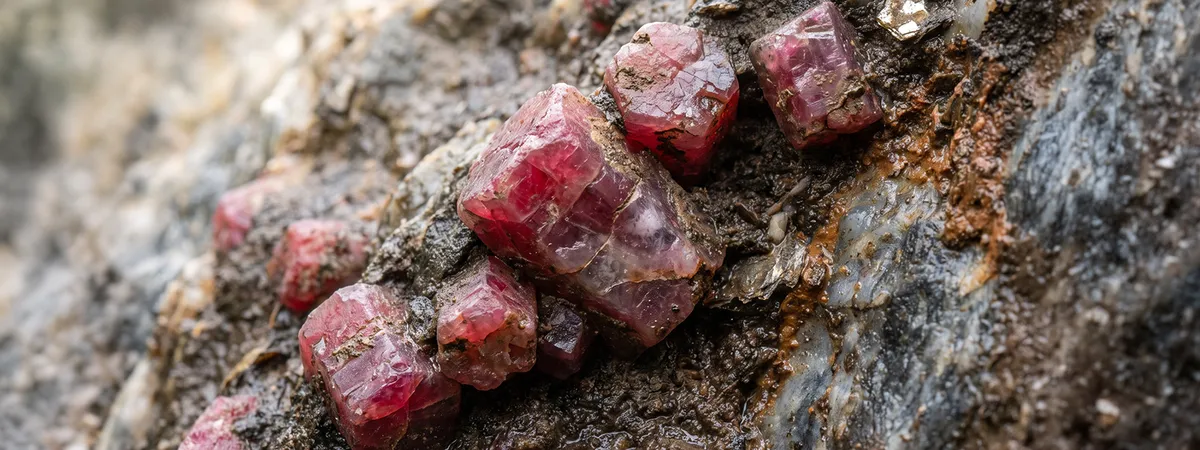
Ruby: July’s Fiery Birthstone
Few gemstones command attention quite like a ruby. With its intense red color, remarkable durability, and centuries of royal history, ruby has long represented passion, strength, protection, and enduring love.
As the traditional birthstone for July, ruby is the perfect gemstone for those born during the heart of summer. Its fiery appearance reflects the warmth, confidence, and energy often associated with the month. However, ruby’s appeal extends far beyond birthstone jewelry. It remains one of the most treasured and valuable colored gemstones in the world.
What Is a Ruby?
Ruby is the red variety of the mineral corundum, the same mineral family that produces sapphires. In its pure form, corundum is colorless. Ruby receives its famous red color from small amounts of chromium within its crystal structure.
The amount of chromium present can influence the strength and intensity of the stone’s color. Ruby may range from a bright, lively red to deeper purplish-red and orangy-red tones. Chromium can also cause ruby to fluoresce, creating a subtle internal glow that makes certain stones appear even more vibrant under natural light.
Although ruby and sapphire belong to the same mineral family, only red corundum receives the ruby name. Corundum in every other color is classified as sapphire.
Why Is Ruby July’s Birthstone?
Ruby has been admired for thousands of years and has traditionally been connected with vitality, courage, prosperity, and protection. Its glowing red color naturally became associated with the heart, blood, fire, and life itself.
The name ruby comes from the Latin word ruber, meaning red. In Sanskrit, ruby was called ratnaraj, meaning “king of precious stones” or “king of gems.” This name reflects the extraordinary position ruby has held throughout history.
Ancient cultures believed rubies possessed powerful qualities. Some warriors carried them for courage and protection, while members of royalty wore them as symbols of wealth, authority, and good fortune. Ruby has also been associated with harmony, strength, and emotional energy.
Today, ruby remains the recognized birthstone for July and is also traditionally associated with the 15th and 40th wedding anniversaries.
The Meaning Behind Ruby
Ruby is often considered the gemstone of passion and powerful emotion. Its rich red color has made it one of the most recognizable symbols of romantic love, making ruby jewelry a meaningful choice for anniversaries, engagements, and important personal milestones.
Beyond romance, ruby can symbolize:
For someone born in July, ruby jewelry can serve as both a personal birthstone and a reminder to approach life with confidence, warmth, and courage.
What Makes a Ruby Valuable?
Ruby quality is evaluated through several important characteristics, including color, clarity, cut, carat weight, origin, and treatment history.
Color
Color is generally the most important quality factor when evaluating a ruby. The most desirable rubies typically display a vivid, well-balanced red to slightly purplish-red color.
A ruby should appear rich and vibrant without becoming excessively dark. Stones that are too dark may lose brightness, while those that are too light may appear pink rather than red. In many markets, intense, pure red colors command the greatest attention and value.
The term “pigeon’s blood” is sometimes used within the gemstone trade to describe an exceptionally vivid red ruby with a subtle purplish quality. However, color descriptions can vary, which is why professional laboratory documentation is especially important for significant stones.
Clarity
Natural rubies commonly contain internal characteristics known as inclusions. These inclusions can provide evidence of natural formation and may help gemologists understand a stone’s origin or treatment history.
Completely inclusion-free natural rubies are extremely uncommon. The key is whether the inclusions noticeably interfere with the ruby’s transparency, brilliance, or structural durability.
A beautiful natural ruby does not need to appear flawless. In many cases, its internal characteristics are part of what makes the gemstone unique.
Cut
The cut of a ruby influences its shape, brightness, color distribution, and overall visual appeal. Ruby cutters must carefully balance beauty with weight retention because fine ruby material can be extremely valuable.
Popular ruby shapes include oval, cushion, round, pear, emerald, and antique-inspired cuts. Cabochon cuts may also be used for stones displaying special optical effects, including star rubies.
A well-cut ruby should display its strongest possible color while reflecting light attractively across the stone.
Carat Weight
Fine-quality rubies become increasingly rare as their size increases. Large rubies with vivid color, good transparency, and minimal treatment can command extraordinary prices.
Unlike diamonds, ruby weight cannot be considered separately from quality. A smaller ruby with outstanding color may be more desirable than a larger stone that appears overly dark, heavily included, or poorly cut.
Where Are Rubies Found?
Rubies have been discovered in several regions around the world. Myanmar, historically known as Burma, is especially famous for producing highly prized rubies, particularly from the legendary Mogok region.
Other important ruby sources include Mozambique, Sri Lanka, Thailand, Vietnam, Tanzania, Madagascar, Afghanistan, and additional parts of Asia and Africa.
Each source can produce rubies with different combinations of color, clarity, fluorescence, and internal characteristics. However, geographic origin alone does not determine a ruby’s beauty. Every stone should be evaluated individually.
For valuable rubies, a respected gemological laboratory may be able to provide information regarding geographic origin and detectable treatments.
Are Rubies Treated?
Many natural rubies receive heat treatment to improve their color or clarity. Heat treatment is widely practiced and can be considered acceptable within the gemstone industry when it is properly disclosed.
Some rubies may receive more extensive treatments, such as fracture filling. These treatments can significantly affect the stone’s durability, care requirements, and value.
An untreated ruby with exceptional natural color and transparency is extremely rare and can carry a substantial premium. Buyers considering an important ruby should ask about treatment history and request documentation from a reputable laboratory whenever appropriate.
Clear disclosure is essential when comparing ruby jewelry because two stones that appear similar may have very different levels of rarity and value.
Is Ruby Durable Enough for Everyday Jewelry?
Ruby is an excellent gemstone for frequently worn jewelry. Corundum ranks 9 on the Mohs scale of hardness, placing ruby just below diamond in terms of resistance to scratching.
This durability makes ruby suitable for rings, earrings, necklaces, bracelets, and even nontraditional engagement rings. However, hardness does not make any gemstone indestructible.
Ruby jewelry should still be protected from hard impacts, harsh chemicals, and sudden temperature changes. Treatment type must also be considered before selecting a cleaning method.
A jeweler should inspect ruby rings regularly to ensure the stone remains secure and the setting is in good condition.
How to Care for Ruby Jewelry
To keep ruby jewelry looking its best, clean it gently with warm water, mild soap, and a soft brush. Rinse the piece carefully and dry it using a soft, lint-free cloth.
Before using ultrasonic or steam cleaning, have the ruby examined by a professional. These methods may be appropriate for some untreated or traditionally heat-treated rubies, but they may not be safe for stones containing fractures, fillers, or other treatments.
Store ruby jewelry separately from softer gemstones. Because ruby is very hard, it can scratch other jewelry when pieces are allowed to rub against one another.
Professional inspections and cleanings can help preserve both the gemstone and its setting for years to come.
Ruby Jewelry Beyond the Birthstone
Ruby may be July’s birthstone, but it is far too captivating to be limited to one month.
A ruby can create a striking center stone in a custom engagement ring, especially when surrounded by diamonds or set in rich yellow gold. Ruby earrings add a dramatic touch of color, while ruby pendants and bracelets can feel both elegant and deeply personal.
Ruby also pairs beautifully with white gold, platinum, rose gold, and mixed-metal designs. Depending on the setting, it can appear romantic and vintage, bold and contemporary, or timeless and regal.
For heirloom jewelry, ruby offers a meaningful combination of durability, symbolism, and unmistakable color.
Celebrate July With a Custom Ruby Design
Ruby is more than a beautiful red gemstone. It carries thousands of years of history, emotion, symbolism, and craftsmanship within its color.
Whether chosen to celebrate a July birthday, commemorate an anniversary, design an unforgettable engagement ring, or create a future family heirloom, ruby makes a powerful statement.
At D’Errico Jewelry, our team can help you explore ruby jewelry, compare stones, and create a custom design handcrafted around your individual style. From the first sketch through casting, stone setting, polishing, and finishing, every detail can be completed through our in-house custom jewelry process.
This July, celebrate with a gemstone that has always represented passion, courage, and enduring love. Discover the unforgettable beauty of ruby, the king of precious gems.
Source: https://www.gia.edu/birthstones/july-birthstones?utm_source=chatgpt.com
Few gemstones command attention quite like a ruby. With its intense red color, remarkable durability, and centuries of royal history, ruby has long represented passion, strength, protection, and enduring love.
As the traditional birthstone for July, ruby is the perfect gemstone for those born during the heart of summer. Its fiery appearance reflects the warmth, confidence, and energy often associated with the month. However, ruby’s appeal extends far beyond birthstone jewelry. It remains one of the most treasured and valuable colored gemstones in the world.
What Is a Ruby?
Ruby is the red variety of the mineral corundum, the same mineral family that produces sapphires. In its pure form, corundum is colorless. Ruby receives its famous red color from small amounts of chromium within its crystal structure.
The amount of chromium present can influence the strength and intensity of the stone’s color. Ruby may range from a bright, lively red to deeper purplish-red and orangy-red tones. Chromium can also cause ruby to fluoresce, creating a subtle internal glow that makes certain stones appear even more vibrant under natural light.
Although ruby and sapphire belong to the same mineral family, only red corundum receives the ruby name. Corundum in every other color is classified as sapphire.
Why Is Ruby July’s Birthstone?
Ruby has been admired for thousands of years and has traditionally been connected with vitality, courage, prosperity, and protection. Its glowing red color naturally became associated with the heart, blood, fire, and life itself.
The name ruby comes from the Latin word ruber, meaning red. In Sanskrit, ruby was called ratnaraj, meaning “king of precious stones” or “king of gems.” This name reflects the extraordinary position ruby has held throughout history.
Ancient cultures believed rubies possessed powerful qualities. Some warriors carried them for courage and protection, while members of royalty wore them as symbols of wealth, authority, and good fortune. Ruby has also been associated with harmony, strength, and emotional energy.
Today, ruby remains the recognized birthstone for July and is also traditionally associated with the 15th and 40th wedding anniversaries.
The Meaning Behind Ruby
Ruby is often considered the gemstone of passion and powerful emotion. Its rich red color has made it one of the most recognizable symbols of romantic love, making ruby jewelry a meaningful choice for anniversaries, engagements, and important personal milestones.
Beyond romance, ruby can symbolize:
- Passion and devotion
- Courage and confidence
- Strength and vitality
- Protection and prosperity
- Energy and ambition
- Lasting love
For someone born in July, ruby jewelry can serve as both a personal birthstone and a reminder to approach life with confidence, warmth, and courage.
What Makes a Ruby Valuable?
Ruby quality is evaluated through several important characteristics, including color, clarity, cut, carat weight, origin, and treatment history.
Color
Color is generally the most important quality factor when evaluating a ruby. The most desirable rubies typically display a vivid, well-balanced red to slightly purplish-red color.
A ruby should appear rich and vibrant without becoming excessively dark. Stones that are too dark may lose brightness, while those that are too light may appear pink rather than red. In many markets, intense, pure red colors command the greatest attention and value.
The term “pigeon’s blood” is sometimes used within the gemstone trade to describe an exceptionally vivid red ruby with a subtle purplish quality. However, color descriptions can vary, which is why professional laboratory documentation is especially important for significant stones.
Clarity
Natural rubies commonly contain internal characteristics known as inclusions. These inclusions can provide evidence of natural formation and may help gemologists understand a stone’s origin or treatment history.
Completely inclusion-free natural rubies are extremely uncommon. The key is whether the inclusions noticeably interfere with the ruby’s transparency, brilliance, or structural durability.
A beautiful natural ruby does not need to appear flawless. In many cases, its internal characteristics are part of what makes the gemstone unique.
Cut
The cut of a ruby influences its shape, brightness, color distribution, and overall visual appeal. Ruby cutters must carefully balance beauty with weight retention because fine ruby material can be extremely valuable.
Popular ruby shapes include oval, cushion, round, pear, emerald, and antique-inspired cuts. Cabochon cuts may also be used for stones displaying special optical effects, including star rubies.
A well-cut ruby should display its strongest possible color while reflecting light attractively across the stone.
Carat Weight
Fine-quality rubies become increasingly rare as their size increases. Large rubies with vivid color, good transparency, and minimal treatment can command extraordinary prices.
Unlike diamonds, ruby weight cannot be considered separately from quality. A smaller ruby with outstanding color may be more desirable than a larger stone that appears overly dark, heavily included, or poorly cut.
Where Are Rubies Found?
Rubies have been discovered in several regions around the world. Myanmar, historically known as Burma, is especially famous for producing highly prized rubies, particularly from the legendary Mogok region.
Other important ruby sources include Mozambique, Sri Lanka, Thailand, Vietnam, Tanzania, Madagascar, Afghanistan, and additional parts of Asia and Africa.
Each source can produce rubies with different combinations of color, clarity, fluorescence, and internal characteristics. However, geographic origin alone does not determine a ruby’s beauty. Every stone should be evaluated individually.
For valuable rubies, a respected gemological laboratory may be able to provide information regarding geographic origin and detectable treatments.
Are Rubies Treated?
Many natural rubies receive heat treatment to improve their color or clarity. Heat treatment is widely practiced and can be considered acceptable within the gemstone industry when it is properly disclosed.
Some rubies may receive more extensive treatments, such as fracture filling. These treatments can significantly affect the stone’s durability, care requirements, and value.
An untreated ruby with exceptional natural color and transparency is extremely rare and can carry a substantial premium. Buyers considering an important ruby should ask about treatment history and request documentation from a reputable laboratory whenever appropriate.
Clear disclosure is essential when comparing ruby jewelry because two stones that appear similar may have very different levels of rarity and value.
Is Ruby Durable Enough for Everyday Jewelry?
Ruby is an excellent gemstone for frequently worn jewelry. Corundum ranks 9 on the Mohs scale of hardness, placing ruby just below diamond in terms of resistance to scratching.
This durability makes ruby suitable for rings, earrings, necklaces, bracelets, and even nontraditional engagement rings. However, hardness does not make any gemstone indestructible.
Ruby jewelry should still be protected from hard impacts, harsh chemicals, and sudden temperature changes. Treatment type must also be considered before selecting a cleaning method.
A jeweler should inspect ruby rings regularly to ensure the stone remains secure and the setting is in good condition.
How to Care for Ruby Jewelry
To keep ruby jewelry looking its best, clean it gently with warm water, mild soap, and a soft brush. Rinse the piece carefully and dry it using a soft, lint-free cloth.
Before using ultrasonic or steam cleaning, have the ruby examined by a professional. These methods may be appropriate for some untreated or traditionally heat-treated rubies, but they may not be safe for stones containing fractures, fillers, or other treatments.
Store ruby jewelry separately from softer gemstones. Because ruby is very hard, it can scratch other jewelry when pieces are allowed to rub against one another.
Professional inspections and cleanings can help preserve both the gemstone and its setting for years to come.
Ruby Jewelry Beyond the Birthstone
Ruby may be July’s birthstone, but it is far too captivating to be limited to one month.
A ruby can create a striking center stone in a custom engagement ring, especially when surrounded by diamonds or set in rich yellow gold. Ruby earrings add a dramatic touch of color, while ruby pendants and bracelets can feel both elegant and deeply personal.
Ruby also pairs beautifully with white gold, platinum, rose gold, and mixed-metal designs. Depending on the setting, it can appear romantic and vintage, bold and contemporary, or timeless and regal.
For heirloom jewelry, ruby offers a meaningful combination of durability, symbolism, and unmistakable color.
Celebrate July With a Custom Ruby Design
Ruby is more than a beautiful red gemstone. It carries thousands of years of history, emotion, symbolism, and craftsmanship within its color.
Whether chosen to celebrate a July birthday, commemorate an anniversary, design an unforgettable engagement ring, or create a future family heirloom, ruby makes a powerful statement.
At D’Errico Jewelry, our team can help you explore ruby jewelry, compare stones, and create a custom design handcrafted around your individual style. From the first sketch through casting, stone setting, polishing, and finishing, every detail can be completed through our in-house custom jewelry process.
This July, celebrate with a gemstone that has always represented passion, courage, and enduring love. Discover the unforgettable beauty of ruby, the king of precious gems.
Source: https://www.gia.edu/birthstones/july-birthstones?utm_source=chatgpt.com