
The 11,000-Carat Ruby Discovery
Every so often, the gemstone world witnesses a discovery so extraordinary that it reminds us just how incredible nature can be.
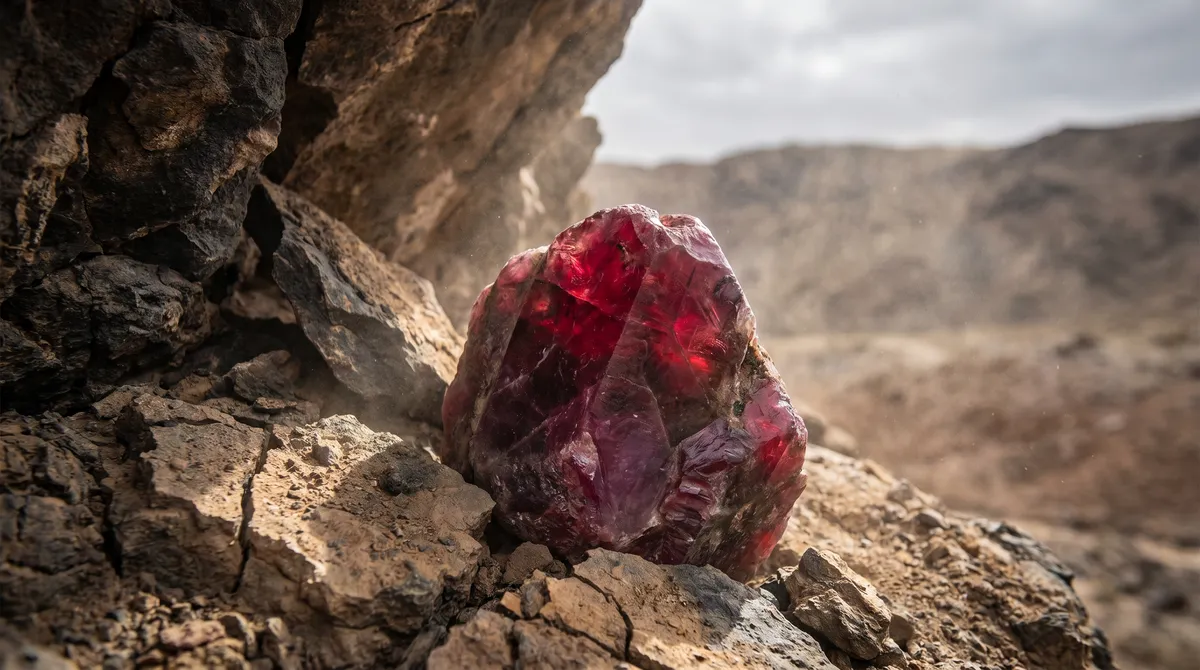
Recently, miners in Myanmar's legendary Mogok Valley uncovered an astonishing rough ruby weighing approximately 11,000 carats, or nearly five pounds. To put that into perspective, the average ruby featured in a fine jewelry ring often weighs between one and two carats. This remarkable crystal is thousands of times larger than the gemstones most people will ever encounter.
A Discovery That Ranks Among the Largest Ever Found
The newly discovered ruby measures roughly 11,000 carats (about 2.2 kilograms or 4.8 pounds), making it one of the most significant rough ruby discoveries in modern history. According to reports, it is considered the second-largest ruby ever found in Myanmar, a country long regarded as the world's premier source for exceptional rubies.
What makes this discovery especially fascinating is that experts believe the stone may be more valuable than some larger rubies found in the past due to its reported color, transparency, and overall quality. Early descriptions characterize the rough crystal as displaying a rich purplish-red color with impressive reflectivity and promising internal characteristics.
Why Mogok Rubies Are Legendary
The ruby was discovered near Mogok, Myanmar, a region often referred to as the "Valley of Rubies." For centuries, Mogok has produced some of the most sought-after rubies in the world, including the famed "pigeon blood" rubies prized by collectors and museums alike.
Many gem experts consider top-quality Mogok rubies to represent the benchmark by which all other rubies are judged. Their intense red color, natural fluorescence, and rarity have made them some of the most valuable colored gemstones ever sold.
What Happens Next?
Finding a ruby this large is only the beginning of the story.
Gemologists and mineral experts will spend considerable time studying the crystal to determine its internal structure, clarity, and overall gem potential. Large rough gemstones often contain fractures, inclusions, or color zoning that can limit their ability to produce high-quality faceted gems.
In many cases, discoveries of this size eventually become museum specimens or are displayed as geological treasures. However, if portions of this ruby prove suitable for cutting, it could yield numerous extraordinary gemstones unlike anything seen in the modern market.
The Fascinating History of Rubies
Rubies belong to the mineral family known as corundum. Their beautiful red color comes from trace amounts of chromium within the crystal structure. Throughout history, rubies have symbolized passion, power, protection, and prosperity.
Ancient kings and rulers prized rubies above nearly all other gemstones. In many cultures, rubies were believed to possess protective powers and were often embedded in armor, crowns, and ceremonial objects. Today, ruby remains one of the world's most cherished gemstones and serves as the birthstone for July.
Some of the Oldest Rubies on Earth
While this newest discovery comes from Myanmar, another fascinating ruby source lies thousands of miles away in Greenland.
Rubies from Greenland's Aappaluttoq deposit are estimated to have formed approximately three billion years ago, making them among the oldest gemstones ever discovered. These ancient crystals provide a remarkable glimpse into Earth's early geological history and demonstrate how ruby deposits can form under vastly different conditions around the world.
A Reminder of Nature's Incredible Power
Whether this 11,000-carat ruby ultimately becomes a museum centerpiece or yields a collection of remarkable gemstones, its discovery serves as a powerful reminder of nature's ability to create treasures on a scale that seems almost unimaginable.
From a gemstone that could fit comfortably on your finger to a ruby weighing nearly five pounds, these discoveries continue to inspire collectors, gemologists, and jewelry lovers around the world.
At D'Errico Jewelry, we never lose our appreciation for the extraordinary journey every gemstone takes. From deep within the earth to becoming a treasured piece of jewelry, every stone carries a story millions, and sometimes billions, of years in the making.
Every so often, the gemstone world witnesses a discovery so extraordinary that it reminds us just how incredible nature can be.
Recently, miners in Myanmar's legendary Mogok Valley uncovered an astonishing rough ruby weighing approximately 11,000 carats, or nearly five pounds. To put that into perspective, the average ruby featured in a fine jewelry ring often weighs between one and two carats. This remarkable crystal is thousands of times larger than the gemstones most people will ever encounter.
A Discovery That Ranks Among the Largest Ever Found
The newly discovered ruby measures roughly 11,000 carats (about 2.2 kilograms or 4.8 pounds), making it one of the most significant rough ruby discoveries in modern history. According to reports, it is considered the second-largest ruby ever found in Myanmar, a country long regarded as the world's premier source for exceptional rubies.
What makes this discovery especially fascinating is that experts believe the stone may be more valuable than some larger rubies found in the past due to its reported color, transparency, and overall quality. Early descriptions characterize the rough crystal as displaying a rich purplish-red color with impressive reflectivity and promising internal characteristics.
Why Mogok Rubies Are Legendary
The ruby was discovered near Mogok, Myanmar, a region often referred to as the "Valley of Rubies." For centuries, Mogok has produced some of the most sought-after rubies in the world, including the famed "pigeon blood" rubies prized by collectors and museums alike.
Many gem experts consider top-quality Mogok rubies to represent the benchmark by which all other rubies are judged. Their intense red color, natural fluorescence, and rarity have made them some of the most valuable colored gemstones ever sold.
What Happens Next?
Finding a ruby this large is only the beginning of the story.
Gemologists and mineral experts will spend considerable time studying the crystal to determine its internal structure, clarity, and overall gem potential. Large rough gemstones often contain fractures, inclusions, or color zoning that can limit their ability to produce high-quality faceted gems.
In many cases, discoveries of this size eventually become museum specimens or are displayed as geological treasures. However, if portions of this ruby prove suitable for cutting, it could yield numerous extraordinary gemstones unlike anything seen in the modern market.
The Fascinating History of Rubies
Rubies belong to the mineral family known as corundum. Their beautiful red color comes from trace amounts of chromium within the crystal structure. Throughout history, rubies have symbolized passion, power, protection, and prosperity.
Ancient kings and rulers prized rubies above nearly all other gemstones. In many cultures, rubies were believed to possess protective powers and were often embedded in armor, crowns, and ceremonial objects. Today, ruby remains one of the world's most cherished gemstones and serves as the birthstone for July.
Some of the Oldest Rubies on Earth
While this newest discovery comes from Myanmar, another fascinating ruby source lies thousands of miles away in Greenland.
Rubies from Greenland's Aappaluttoq deposit are estimated to have formed approximately three billion years ago, making them among the oldest gemstones ever discovered. These ancient crystals provide a remarkable glimpse into Earth's early geological history and demonstrate how ruby deposits can form under vastly different conditions around the world.
A Reminder of Nature's Incredible Power
Whether this 11,000-carat ruby ultimately becomes a museum centerpiece or yields a collection of remarkable gemstones, its discovery serves as a powerful reminder of nature's ability to create treasures on a scale that seems almost unimaginable.
From a gemstone that could fit comfortably on your finger to a ruby weighing nearly five pounds, these discoveries continue to inspire collectors, gemologists, and jewelry lovers around the world.
At D'Errico Jewelry, we never lose our appreciation for the extraordinary journey every gemstone takes. From deep within the earth to becoming a treasured piece of jewelry, every stone carries a story millions, and sometimes billions, of years in the making.